




Spring Skin Reset: How to Restore Skin After Winter | md:ceuticals Discover how to reset your skin after winter with a professional spring skincare routine. Improve hydration, texture, and radiance with md:ceuticals solutions. After winter, the skin often appears dull, dehydrated, and more reactive due to environmental stress. Spring is the ideal moment to activate a skin cellular reset, restoring vitality, improving texture, and preparing the skin for increased exposure to UV radiation. At md:ceuticals, this reset is achieved through a combination of biotechnology, plant-based actives, and advanced mesotherapy solutions that work synergistically to reactivate skin function.


Table of Contents
Why Photoprotection Is the Cornerstone of Skincare
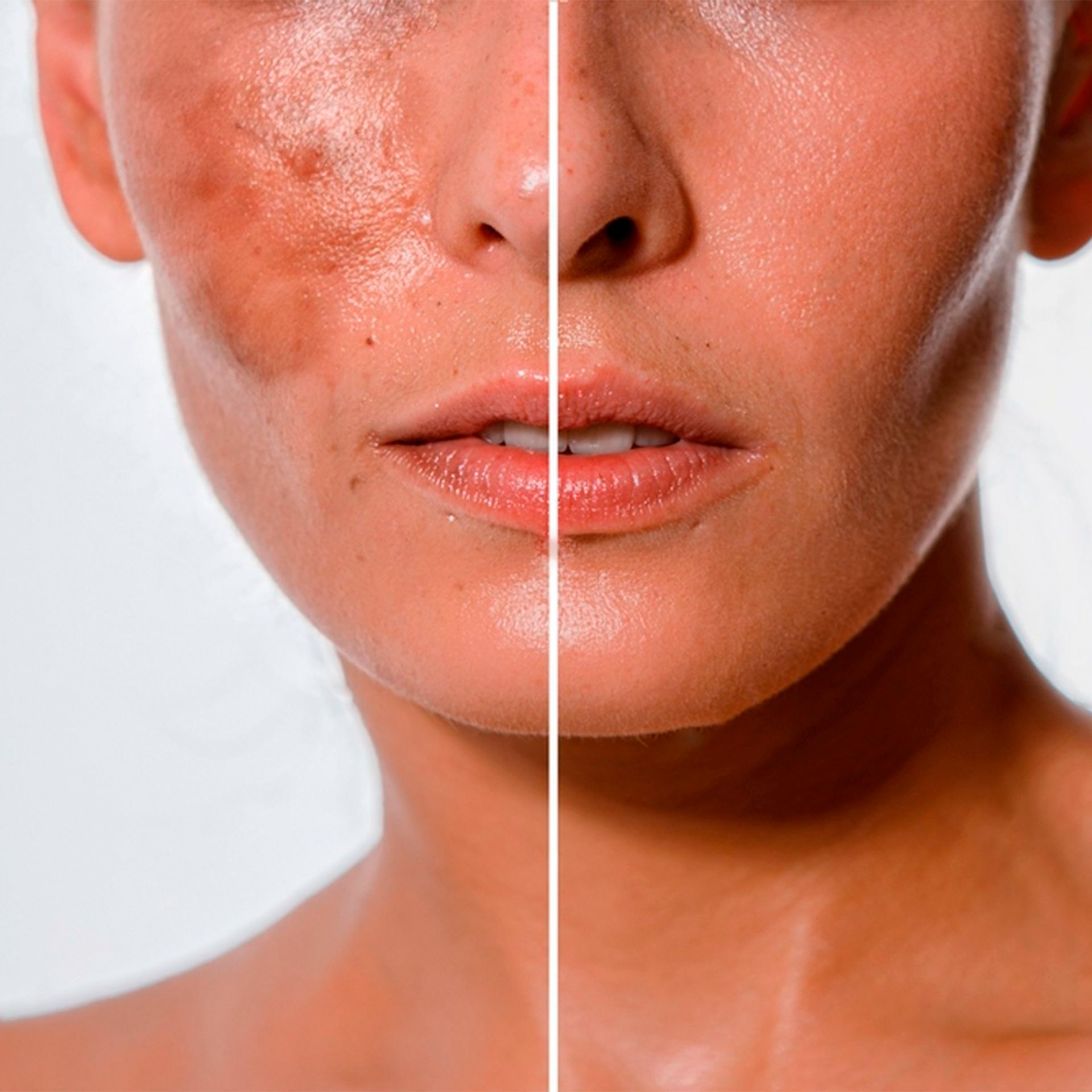
UV radiation is the primary driver of extrinsic skin ageing. Repeated exposure triggers photooxidative stress, breaks down collagen and elastin, disrupts the skin barrier, and stimulates abnormal melanin production. The consequences include wrinkles, hyperpigmentation, dullness, and increased cancer risk.
Daily photoprotection is not just a summer habit, it is a year-round clinical necessity and the most evidence-backed anti-ageing measure available.
Physical vs. Chemical Filters: What's the Difference?
a) Physical (Mineral) Filters
Ingredients such as Titanium Dioxide and Zinc Oxide work by reflecting and scattering UV radiation on the skin surface. They are:
Broad-spectrum (UVA + UVB protection)
Photostable they do not degrade with sun exposure
Well tolerated by sensitive and reactive skin
Ideal post-procedure: after peels, mesotherapy, or biorevitalisation
b) Chemical (Organic) Filters
These absorb UV radiation and convert it to heat. They offer a lighter texture and are more cosmetically elegant, but some can cause sensitisation in reactive skin types.
c) Combined Approach
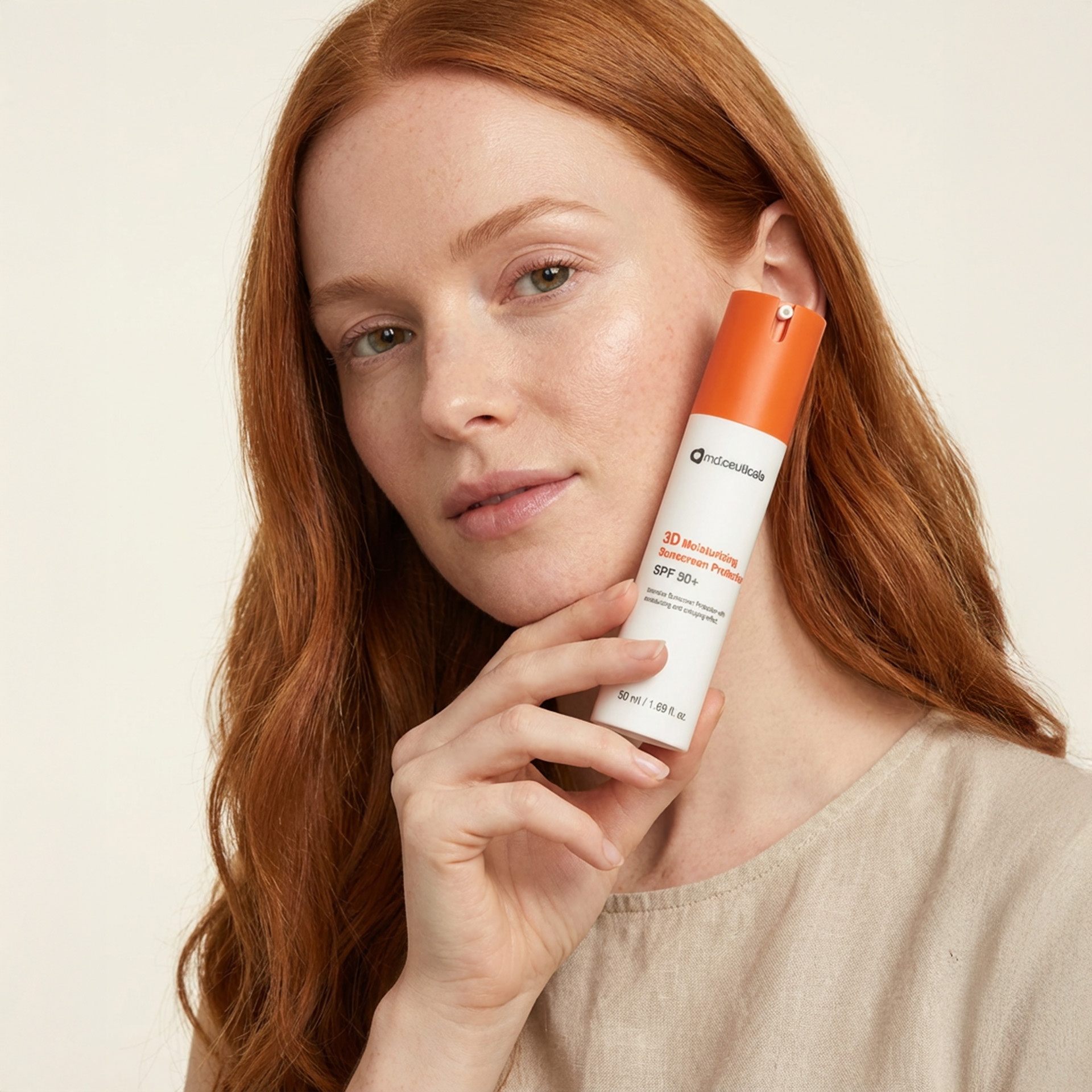
md:ceuticals 3D Moisturizing Sunscreen Protection SPF 50+ uses a dual-filter strategy, enhanced with Niacinamide, Vitamin E, and Panthenol to protect, repair, and maintain hydration simultaneously. It goes beyond traditional sun care by combining advanced physical UV filters with powerful antioxidant protection for a truly comprehensive defense against photoaging. While Zinc Oxide and Titanium Dioxide effectively reflect and block harmful UVA and UVB rays, the formula’s antioxidant complex works at a deeper cellular level to neutralize free radicals and oxidative stress triggered by sun exposure. This dual-action approach not only helps prevent burns, pigmentation, and visible signs of aging, but also supports skin regeneration, collagen preservation, and long-term skin health.
Understanding the SPF Number
SPF (Sun Protection Factor) measures UVB protection specifically. SPF 50 blocks approximately 98% of UVB radiation; SPF 100 blocks 99%. The difference sounds marginal, but for photosensitive or post-treatment skin, it is clinically significant.UVA protection (responsible for deep photoageing and pigmentation) is indicated by a PA rating or star system and is equally important when selecting a product.
How to Choose the Right SPF for Your Skin Type
✅ Normal skin:
A broad-spectrum SPF 30–50 with a lightweight texture. Look for added antioxidants.
✅ Oily/acne-prone skin:
Oil-free, non-comedogenic formulas. Gel or fluid textures that won't clog pores.
✅ Dry skin:
SPF with added humectants (Hyaluronic Acid, Glycerin) and emollients.
✅ Sensitive/reactive skin:
Mineral-only filters (Zinc Oxide). Fragrance-free, minimal ingredient list.
✅ Post-treatment skin:
SPF 50+ with a calming and repairing formula essential after any professional procedure.
Integrating SPF Into Your Daily and Professional Routine
Application rules to maximise efficacy:
- Apply SPF as the final step of the morning skincare routine
- Use at least 2mg/cm² (approximately 1/4 teaspoon for the face alone)
- Reapply every 2 hours during outdoor exposure
- Always apply SPF after professional treatments, including peels and mesotherapy
In a clinical setting, photoprotection is an essential complement to any treatment protocol targeting hyperpigmentation, photoageing, or acne. Without adequate SPF, the results of even the most advanced treatments are compromised.
Final Thoughts
Choosing the right SPF is a clinical decision, not just a cosmetic one. By understanding filters, SPF values, and individual skin profiles, both professionals and patients can maximise protection and preserve the results of every skincare investment. md:ceuticals 3D Moisturizing Sunscreen Protection SPF 50+ offers a complete solution: advanced photoprotection, skin barrier support, and a formula suitable for use after any professional treatment.
Related posts










































































md:ceuticals
International company present in more than 80 countries. Clinical studies demonstrate the benefits of our products to reverse the visible signs of ageing, providing our customers with the safest and most effective professional treatments.
Do you have any questions or comments about our products?
Resources
Newsletter
English


