




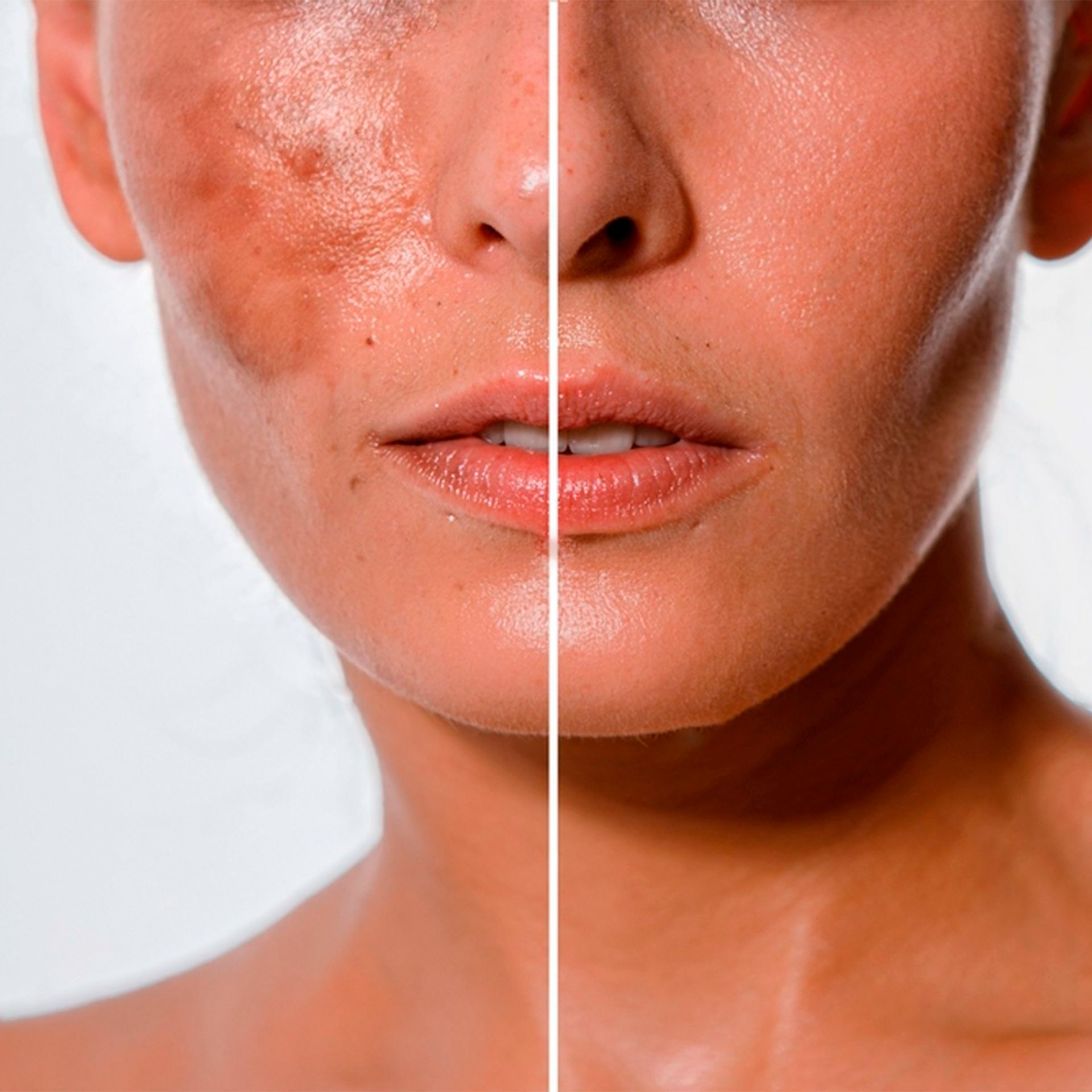
Most patients think of hyperpigmentation as an autumn problem something to address once the sun is gone. But the truth is that the skin’s pigmentation story for the year is written in summer. Every unprotected day, every UV-triggered burst of melanin activity, every micro-inflammatory event adds up invisibly beneath the surface. By the time dark spots become visible, the damage is already done.
The clinicians who deliver the most impressive depigmentation results in autumn are those who start the conversation in summer by putting the right protocol in place before pigmentation has a chance to take hold.



Table of Contents
Why Summer Is the Highest-Risk Season for Pigmentation
UV radiation is the single most powerful external trigger of melanin overproduction. During summer, cumulative exposure reaches its annual peak — and for patients with a history of melasma, solar lentigines, or post-inflammatory hyperpigmentation (PIH), this is when their skin is most vulnerable.
But pigmentation risk in summer is not limited to high-phototype patients or those with existing conditions. Hormonal fluctuations, heat-induced inflammation, and barrier compromise all amplify the skin’s melanogenic response — making proactive management relevant for a much wider patient population than is often assumed.
The goal in summer is not aggressive correction. It is intelligent control: suppressing the triggers, protecting the skin daily, and maintaining the structural health that will make autumn treatments more effective.
How UV Drives Melanogenesis
The mechanism linking UV exposure to hyperpigmentation involves several converging pathways:
- Tyrosinase activation: UV directly stimulates tyrosinase, the enzyme that catalyses melanin biosynthesis. Even brief, repeated exposures accumulate over weeks to produce visible discolouration.
- Keratinocyte-melanocyte signalling: UV-damaged keratinocytes release inflammatory mediators that instruct melanocytes to increase melanin production, creating a self-amplifying cycle that continues well after sun exposure ends.
- Oxidative stress: Reactive oxygen species (ROS) generated by UV further stimulate melanogenesis while simultaneously degrading collagen and elastin — accelerating both pigmentation and photoageing.
- Hormonal amplification: In melasma-prone patients, UV interacts with oestrogen and progesterone signalling to dramatically intensify melanin overproduction, making consistent photoprotection and melanogenesis inhibition essential throughout the season.
The Three Pillars of In-Season Pigmentation Control
Melanogenesis Inhibition
Blocking melanin synthesis at multiple points in the production cascade is the most effective way to prevent new pigmentation from forming. In summer, this requires topical agents that are both potent and compatible with daily sun exposure — working continuously to keep melanocyte activity under control.
Daily Photoprotection and Coverage
No depigmentation strategy is effective without rigorous, consistent sun protection. SPF is not a supporting step — it is the foundation the entire protocol rests on. For patients undergoing active treatment, combining photoprotection with daily colour correction reduces the psychosocial impact of existing blemishes while the skin responds to treatment.
Antiageing and Structural Maintenance
UV does not only darken the skin — it ages it. Collagen and elastin degradation, loss of firmness, and the onset of fine lines all accelerate during summer. Maintaining peptide-based antiageing support throughout the season counteracts this process and ensures the skin arrives in autumn in optimal condition for more intensive protocols.
Key Ingredients for Summer Pigmentation Management
- Alpha Arbutin: stable tyrosinase inhibitor that suppresses new melanin formation without photosensitising the skin — ideal for year-round use.
- Kojic Acid / Azelaic Acid: complementary melanogenesis blockers that provide additional inhibition at different stages of the production cascade.
- Niacinamide: reduces melanosome transfer to keratinocytes, evens skin tone, and reinforces the barrier — a multi-functional active suited to daily summer use.
- Ascorbyl Glucoside (Vitamin C): antioxidant and brightening, it neutralises UV-generated ROS before they can trigger further melanin production or collagen degradation.
- Biomimetic Peptides and Growth Factors: maintain collagen and elastin production throughout summer, countering the daily photoageing effect of UV exposure.
A Summer Pigmentation Protocol with md:ceuticals
Application rules to maximise efficacy:
- md:ceuticals offers a focused range of treatments and homecare formulations designed to keep pigmentation under control throughout the summer season — without compromising skin integrity under daily UV conditions.
- a) Professional Depigmentation Control
- b) Daily Homecare: Melanogenesis Under Control
- c) Daily Protection and Colour Correction
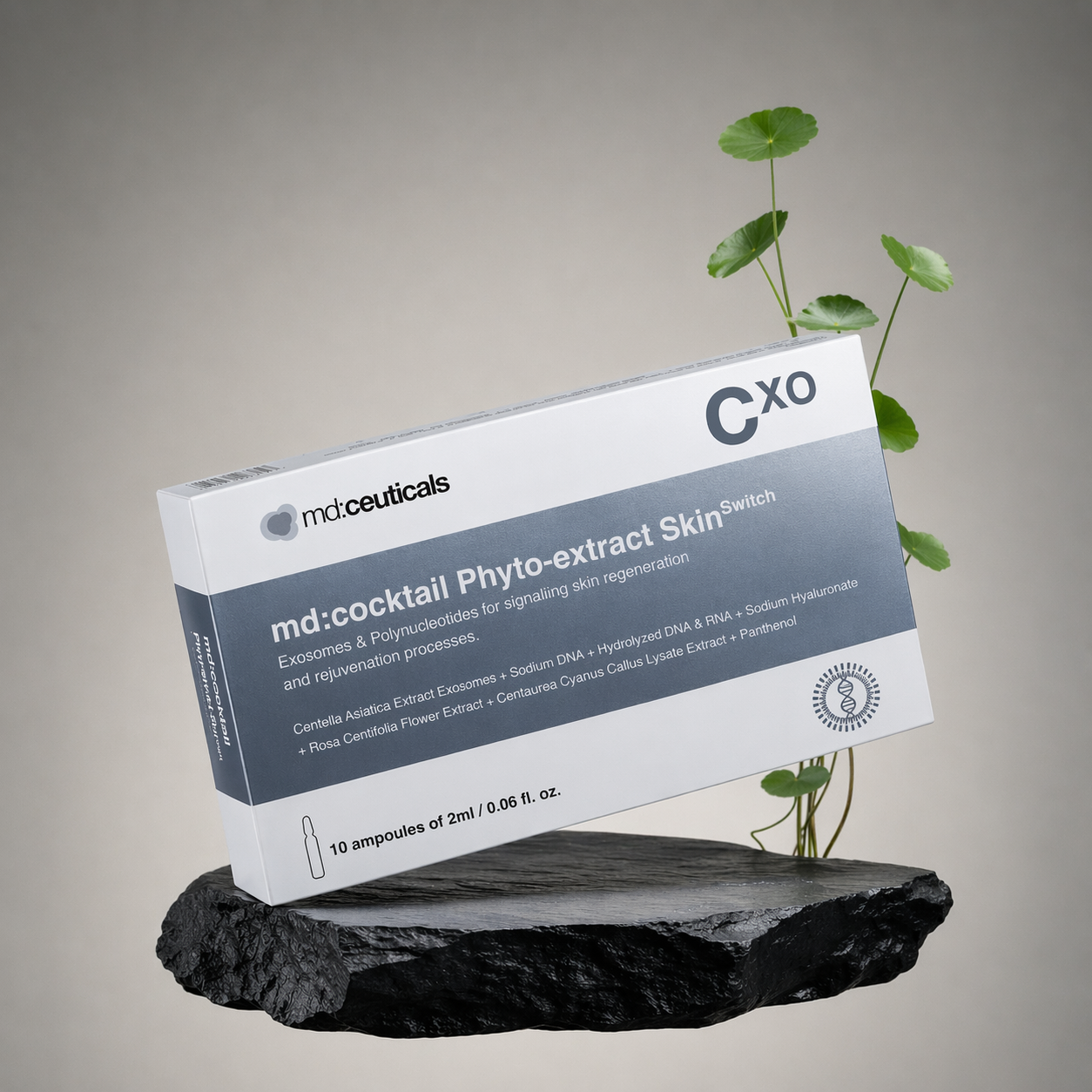
- d) Antiageing Support Throughout the Season
Final Thoughts
The patients who arrive in September with clear, even, resilient skin are not those who waited for summer to end. They are those who treated it as an active management season — keeping melanogenesis under control, protecting the skin daily, and maintaining its structural health in parallel.
With md:ceuticals, clinicians have the tools to make that possible: professional treatments that control pigmentation safely during summer, homecare that consolidates results daily, and antiageing support that ensures the skin is in peak condition when the intensive treatment season begins. Trusted by specialists. Chosen for results.15
Related posts





































































md:ceuticals
International company present in more than 80 countries. Clinical studies demonstrate the benefits of our products to reverse the visible signs of ageing, providing our customers with the safest and most effective professional treatments.
Do you have any questions or comments about our products?
Resources
Newsletter
English


